Baseball awards come in four broad families: column trophies, sculpted resin figures, acrylic, and crystal. They look interchangeable in a catalog thumbnail, but they behave very differently on height, price, durability, and the kind of recognition they signal. This comparison lines them up on the specifications that actually decide an order so you can match the award to the moment instead of the photo.
Height and Physical Presence
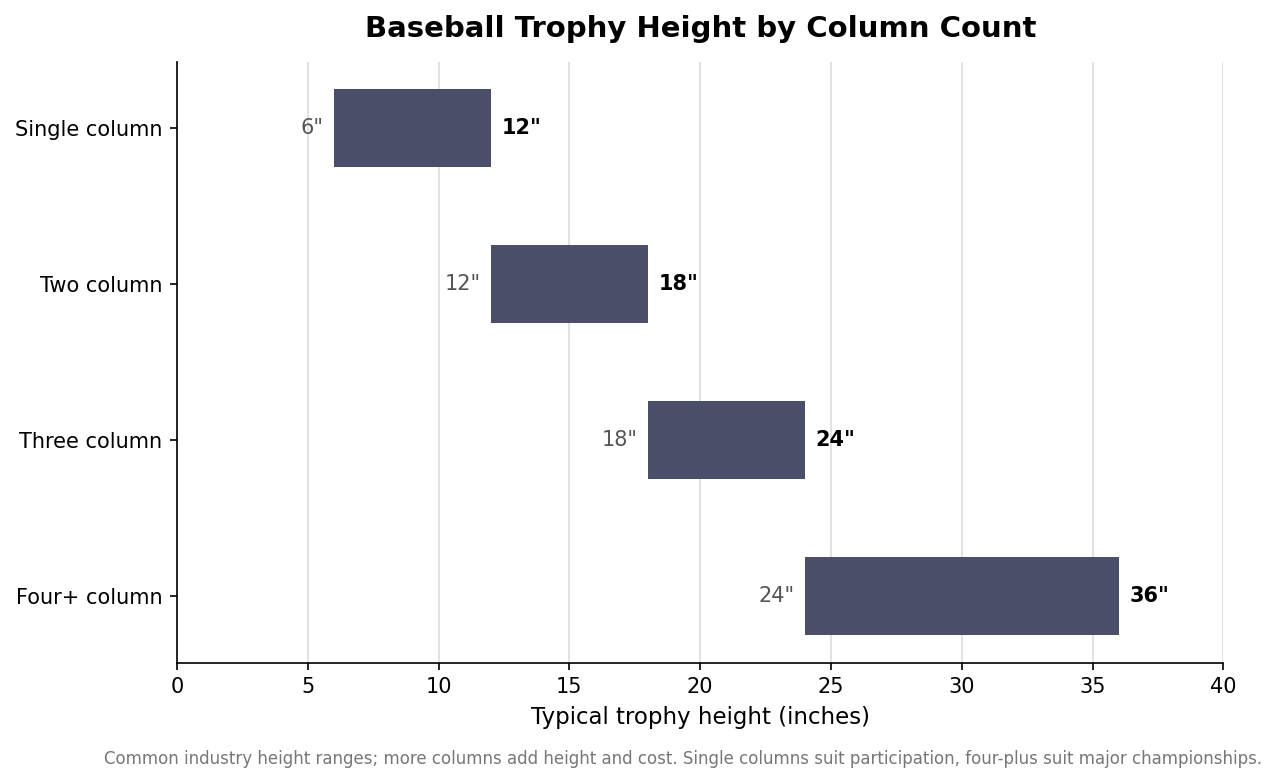
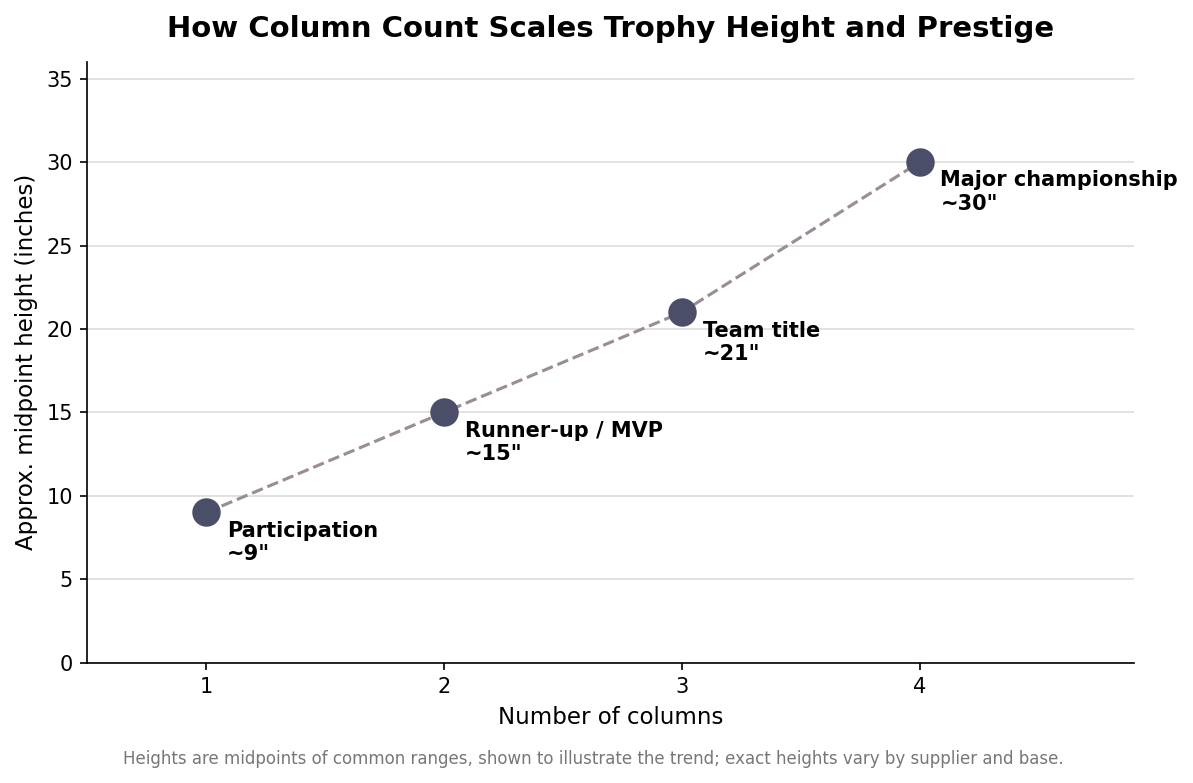
Column trophies are the height champions because you build them taller simply by stacking columns. A single-column trophy generally stands 6 to 12 inches, a two-column runs about 12 to 18 inches, three columns reach roughly 18 to 24 inches, and four-or-more-column builds climb from 24 inches past 36. That modularity is why column trophies dominate team championships: the size scales with the significance, and a taller award reads as a bigger deal from across a gym.
Sculpted resin awards occupy the small-to-medium band, typically 6 to 12 inches, and win on detail rather than height, since the figure itself is the whole award. Acrylic pieces are usually medium height and prized for a clean modern look, while crystal awards are generally kept in the 6-to-12-inch range because scaling glass up adds weight and cost quickly. If sheer stature is the goal, columns win; if a compact, detailed keepsake is the goal, resin and crystal make more sense.
Height also interacts with the display setting, which buyers often forget. A 30-inch four-column championship trophy needs floor or wide-shelf space and looks lost on a small mantel, while a 6-inch resin figure disappears on a large awards table but shines in a case at eye level. Think about where the award will actually live after the ceremony, because the same height that reads as impressive in a gym can be impractical in a player’s bedroom. For team awards that stay at a clubhouse, taller is usually better; for individual keepsakes that go home, a medium or small piece is easier to keep and display.
Price Bands and What Drives Them
Cost tracks material and size more than anything else. Acrylic is generally the most affordable of the four and gives vibrant color and laser engraving at a friendly price, which is why it shows up so often for league-wide participation and team gifts. Column and resin trophies sit in the value-to-midrange zone, with price rising as you add columns, height, figures, and engraved plates. Crystal is the premium tier, carrying the highest per-piece cost for a heavier, more elegant piece reserved for standout honors.
The practical lesson is to let the recognition tier set the material. A twelve-team youth league buying an award for every player is a job for affordable acrylic or a modest single-column trophy, where the per-unit price matters most. A single Most Valuable Player or coach award, bought once, is where crystal earns its premium because the cost of one nice piece is small and the impression is large. Spending crystal money on a hundred participation awards, or handing a league champion a six-inch giveaway, are both mismatches the price bands help you avoid.
Durability and Handling
Durability cuts against prestige in a way buyers often miss. Acrylic is lightweight and shrugs off drops, which makes it a sensible choice for young kids who will carry, wave, and inevitably knock the award around. Column and resin trophies are reasonably rugged, though their most common failure is a figure or column working loose over time rather than the body breaking. Crystal looks and feels the most premium but is the most fragile of the group and the least forgiving of a fall, so it suits a display shelf far better than a dugout.
Weight follows the same pattern and matters for shipping and for the recipient. A tall multi-column trophy and a crystal award are both heavy for their size, which raises freight on a bulk order and makes a small child’s trophy top-heavy. If awards will be handed to eight-year-olds or mailed in volume, lean toward lighter acrylic and resin; if they will live in a trophy case or on an executive shelf, the weight of crystal is part of the appeal.
Base construction is the quiet durability factor across every family. Marble and heavy composite bases add stability and a premium feel but also add shipping weight and can crack if dropped on a hard floor, while lighter plastic bases travel better and cost less. On column and resin trophies the base is also where the engraved plate lives and where a spinning figure is anchored, so a well-made base with a secure fastener does double duty on looks and longevity. When comparing two similar trophies at different prices, the base is often where the cheaper one saved money.
Personalization and Turnaround
All four families personalize, but not identically. Acrylic and crystal take laser engraving and, in the case of acrylic, full-color printing and custom shapes, which opens the door to logos, sponsor marks, and photographic detail. Column and resin trophies personalize mainly through engraved plates on the base, so the fit and wording of that plate is where the customization lives, and getting the plate layout right is the difference between a clean award and a cramped one. Perpetual and multi-year awards add a further wrinkle, because you have to plan enough plate space for every future winner before you buy the base.
Lead time generally rises with complexity and personalization. Stock acrylic and resin with a simple engraved plate turn around fastest, while custom crystal, large multi-column builds, and anything requiring proofs take longer, so order dated awards with a buffer. The clean way to choose is to fix the recognition tier first, let that set a material and a height band, then confirm the engraving method and lead time before you approve artwork. Do that and each family lands where it belongs: acrylic and resin for breadth and budget, columns for scalable team prestige, and crystal for the one award that has to feel special.